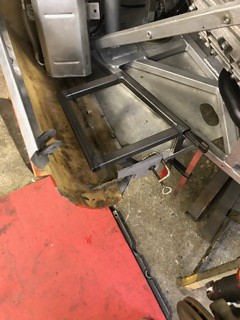
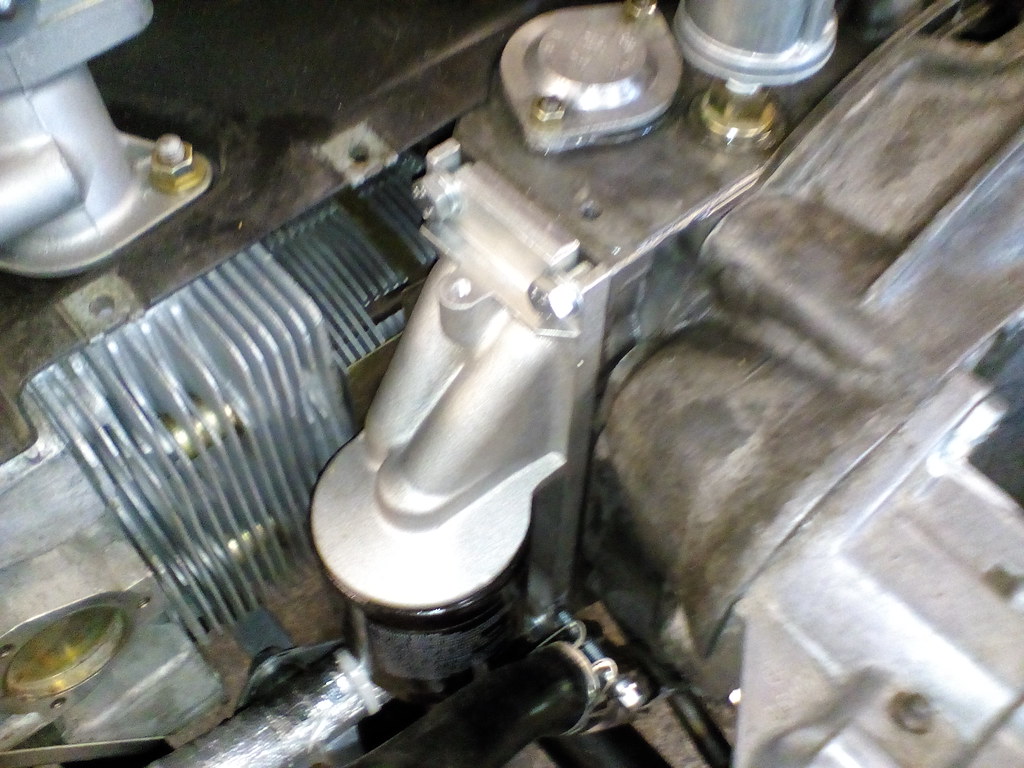
Andy had, by this time, cut, welded and rivetted aluminium panels in the front to seal off the front wheel arches. We had also procured wheel spacers and longer wheel studs for the front as the new wheels just fouled the calipers and needed to be moved outboard a tad. A new shroud piece had been made to seal off the back left hand barrel which was now exposed by the 993 housing and oil filter.
The oil lines and breather tubes were installed and the thermostatic bypass used on MK1 was dispensed with. The oil tubes were increased in bore size since we wanted to remove any restriction to the oil flow going forward to the oil cooler in the front. As I said before oil is good stuff!
We were now reaching the stage where the bullet had to be bitten. The Clewett was wired up as per the manual even to the extent of powering the system with a separate fused feed (more of which later.) As usual, we turned over the engine without the ignition circuit being live. There was oil pressure and lovely clean oil flowing into the dry sump tank.
It fired up immediately when the ignition was switched on. Three very happy chappies!
However, there were a few oil leaks which just meant tightening up in a few places. One major/minor was oil dripping from pin holes in the oil drain tubes.
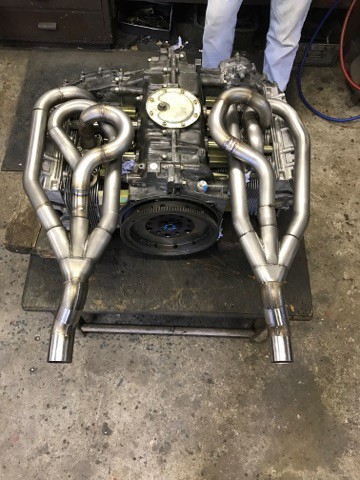
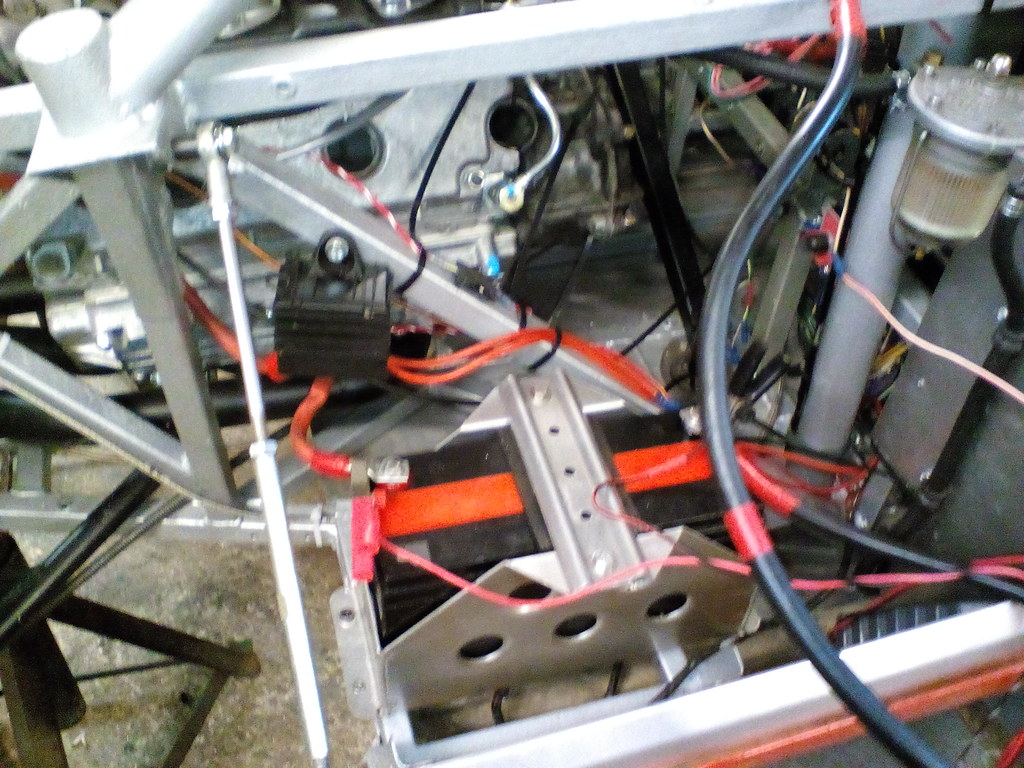
I should point out at this stage the space round the 6 cyl engine is tight. To install it, the first task is to thread the transmission between the chassis tubes, then lay the exhausts in place, lower the engine and connect it to the transmission. Finally to bolt up the exhausts to the outlet ports. A complicated and slow procedure. I blame the chassis designer!! The oil drain tubes are now very difficult to access. The only way to stop the leaks was to use the coca cola tin and jubilee clips method with globs of sealant.
Next step was a trip along the road to Dave Boggs to tune the Webers on his rolling road

Well, Mike was correct, over 200 BHP on the dial! Dave Boggs has been tuning engines fo ever and recommended that the jets be such as to run a little rich for the first season as the engine bedded down. He also advised me not to increase the choke size as the small chokes would give better pick up even though increased power at the top end would result from larger chokes. Since the car would be doing hills and sprints in the main, torque was the requirement, hence the "E" cams and small chokes.
It will be interesting to hear what is the opinion of the forum followers.










 r[/img]
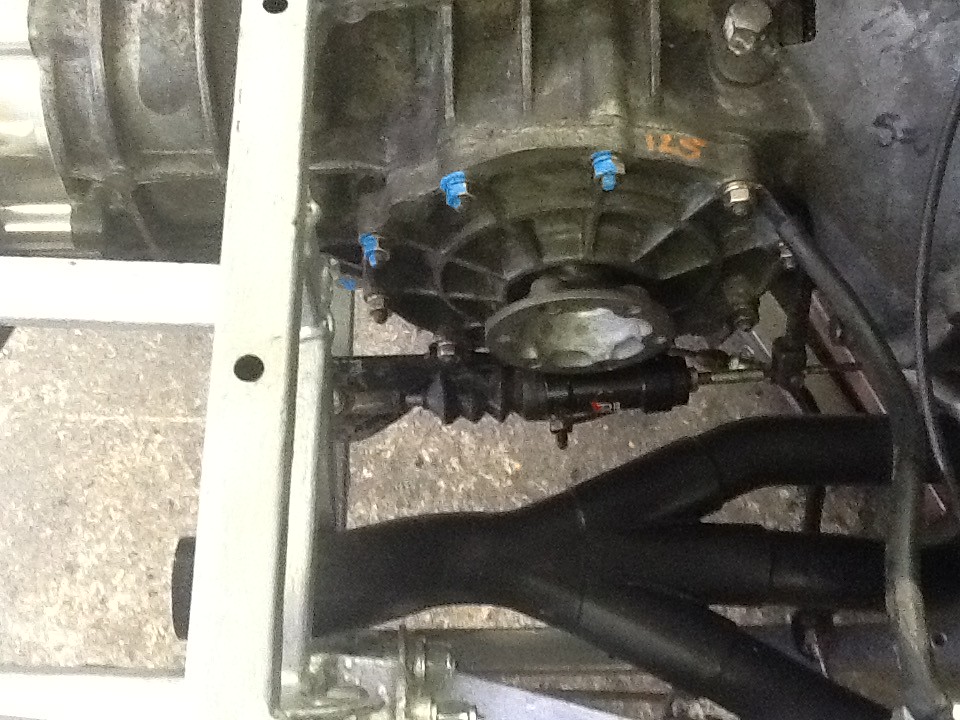


 Love the gearbox details