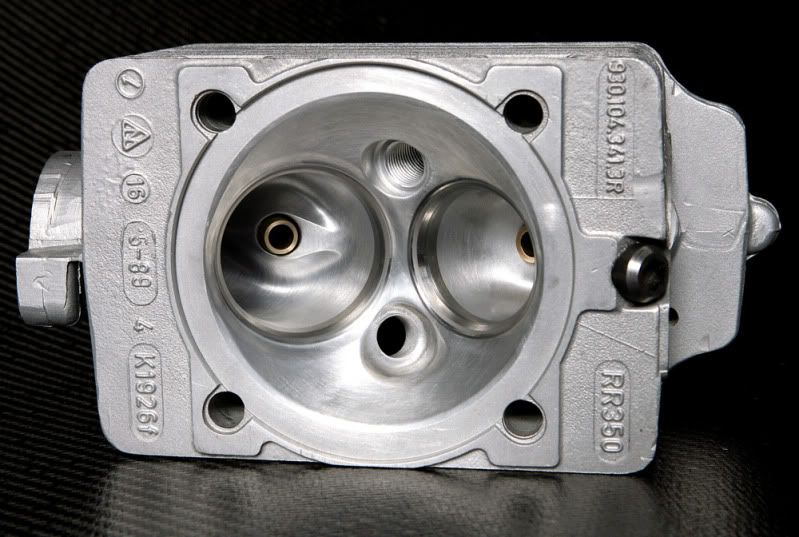
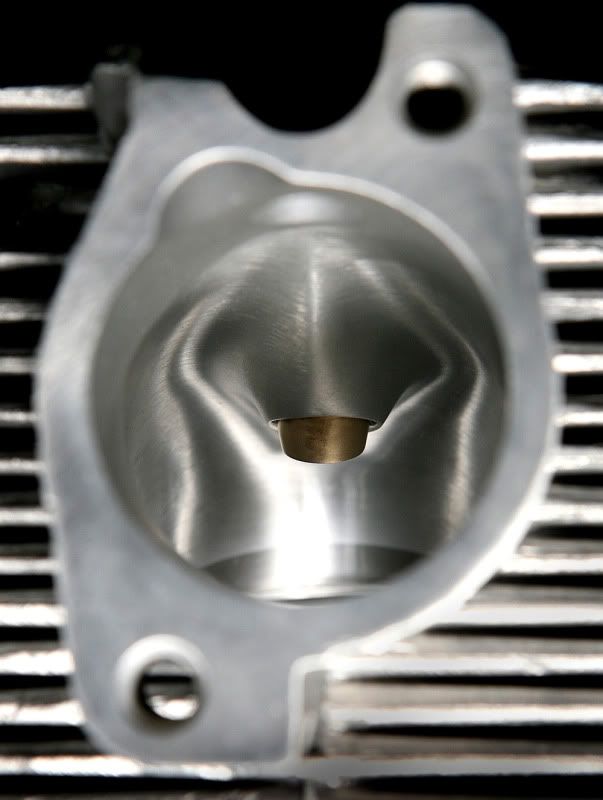
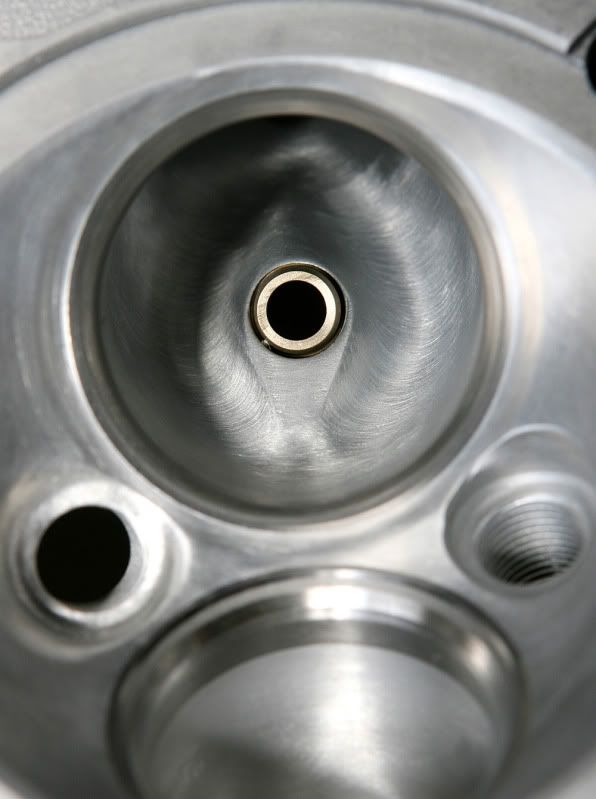
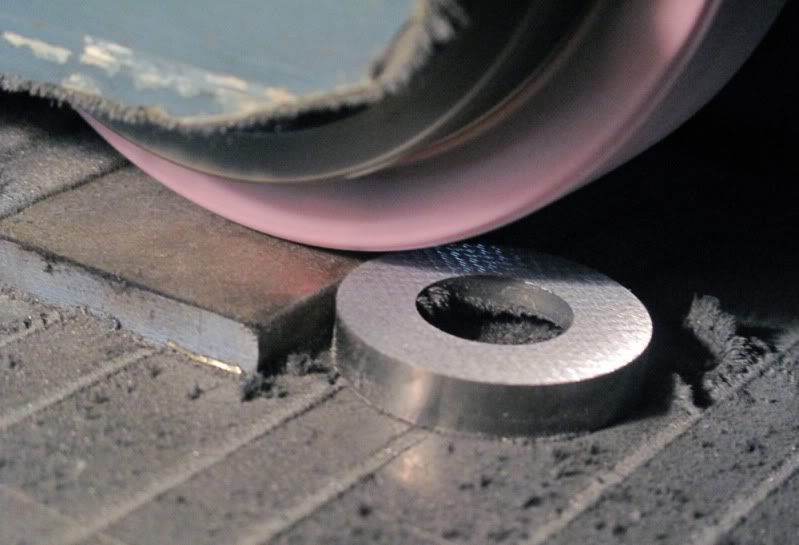
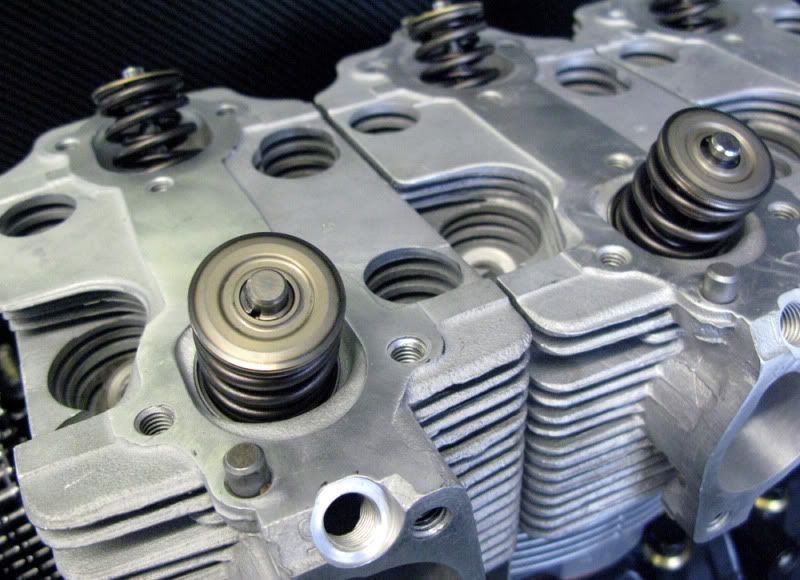
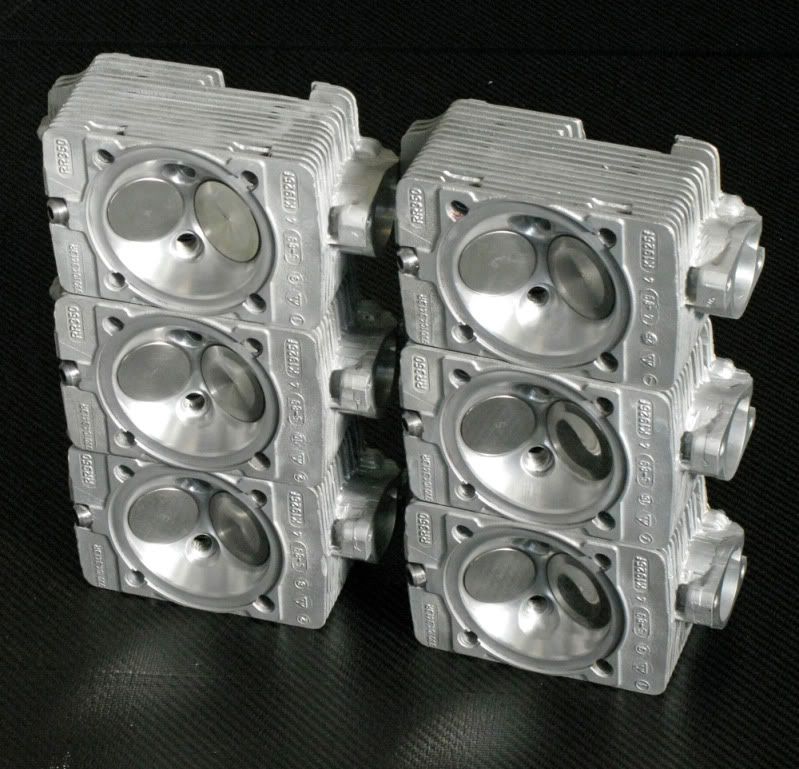
Now the valves are in, we can now properly cc the heads for the next stage which is to make sure they all have the same volume. This is done by placing a flat clear plate with a central hole as a filler and another at the top to let out the air, and then filling with fluid, in this case paraffin. This is a very controlled process to get right, with bubbles being a big problem.
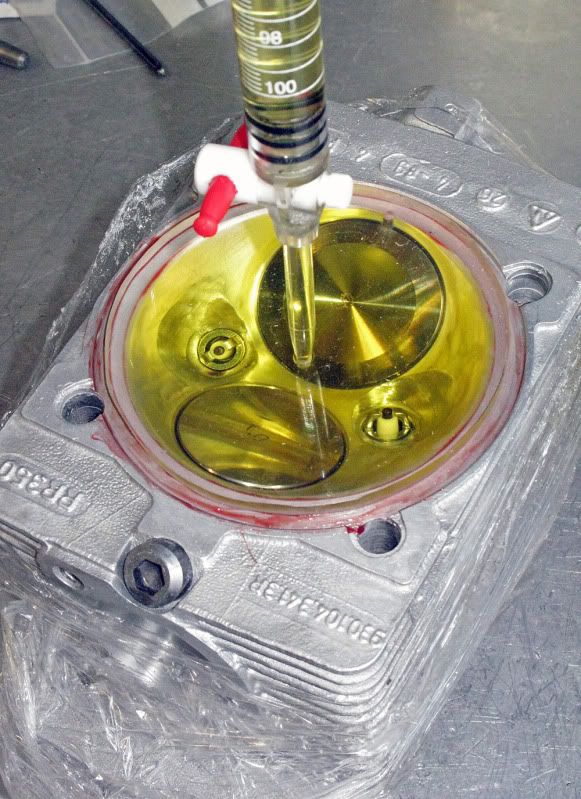
Having then measured the volume in each head and seeing the discrepancies, you have to machine out small amounts of material from each spark plug pocket then clean it all out and set up the measuring system again. It still won't be right unless you are really lucky so you take out the fluid, clean it up, machine again, clean that up fill with fluid and measure again hoping it's right this time.
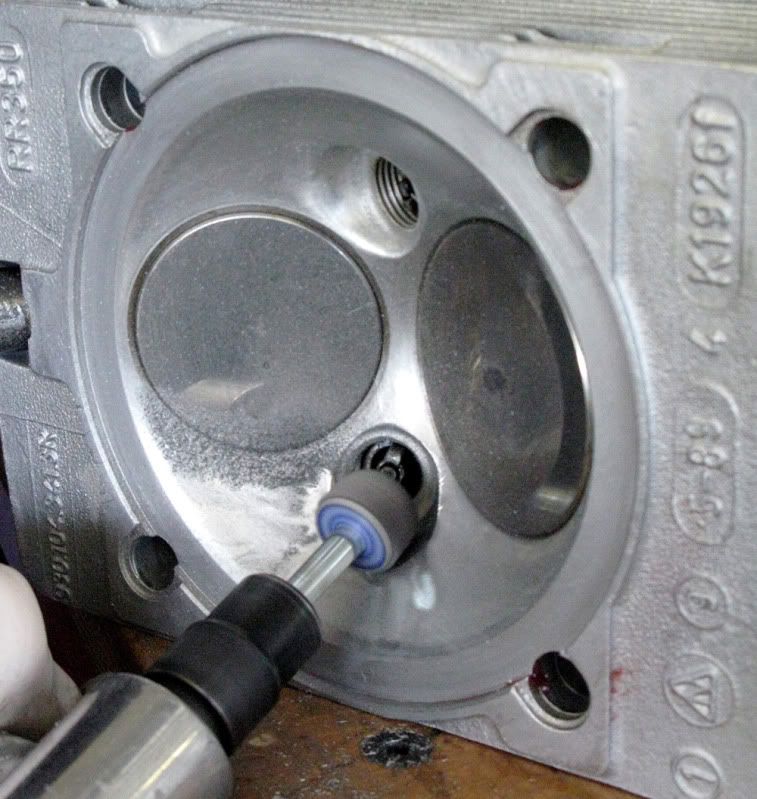
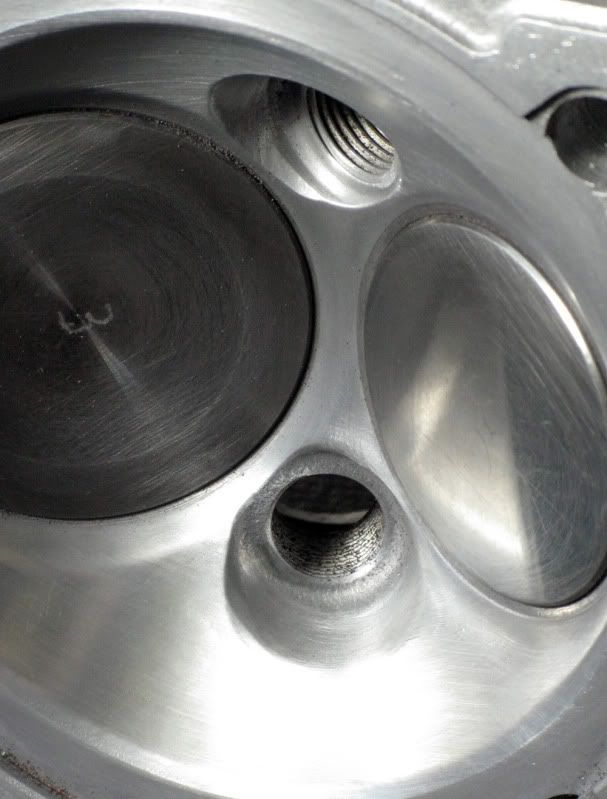
Then just the other 5 heads to do. You begin to realise how time consuming this all is and why a competition engine takes so many hours to build. We got the volumes to match in all heads to within .2 of a cc in the end which is pretty good I'm told. Note below the valves are numbered to the particular head, which is seen prior to cleaning.
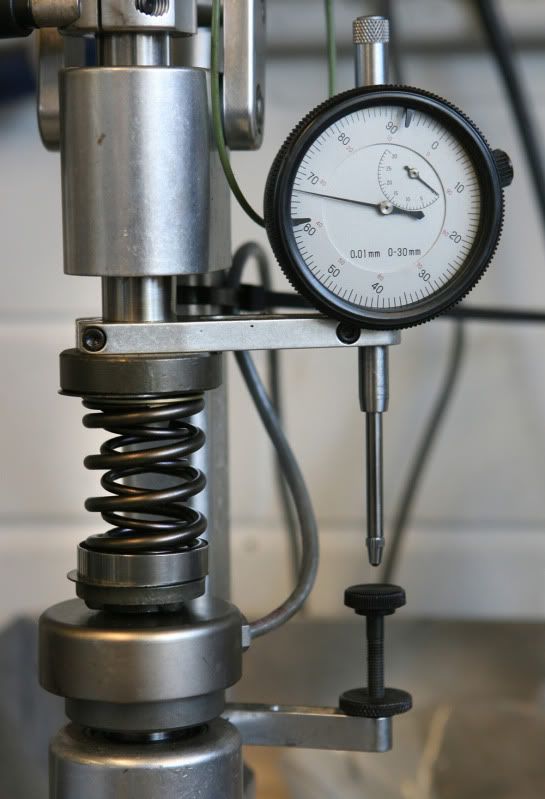
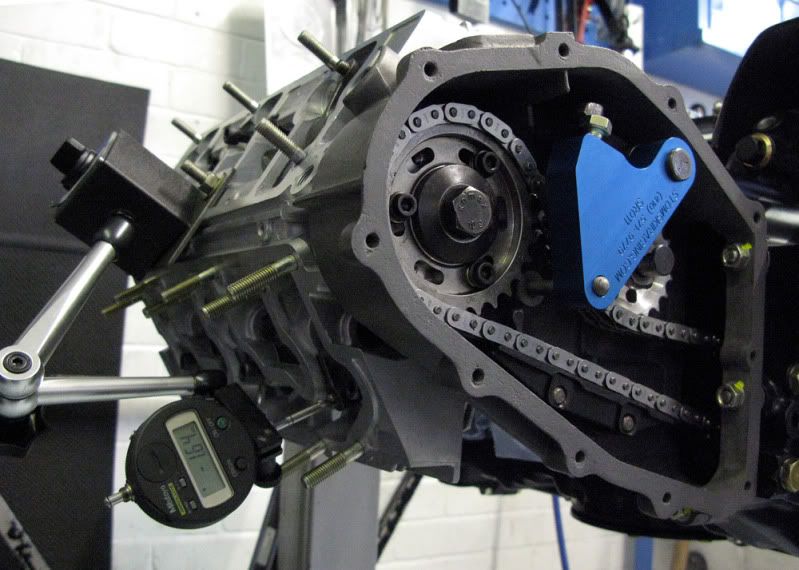
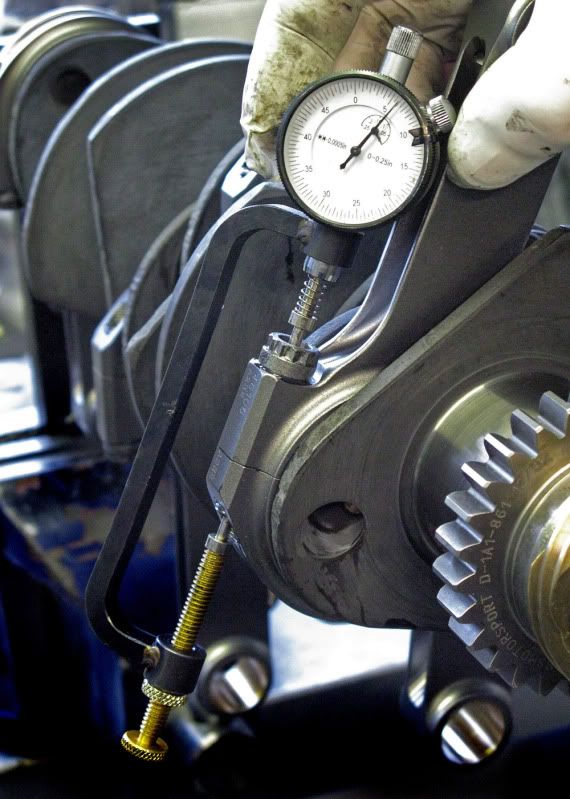
Another test before fitting the heads permanently, is the head to piston clearance and valve to piston clearance, again we had the computer predictions but have to confirm it physically. You have to fit up the cam and rocker and do the cam timing to bring the piston to tdc then use bits of plasticine, fit the head then torque it down. For the valve to piston clearance you set up a micrometer and measure the valve stem travel to work out the gap.
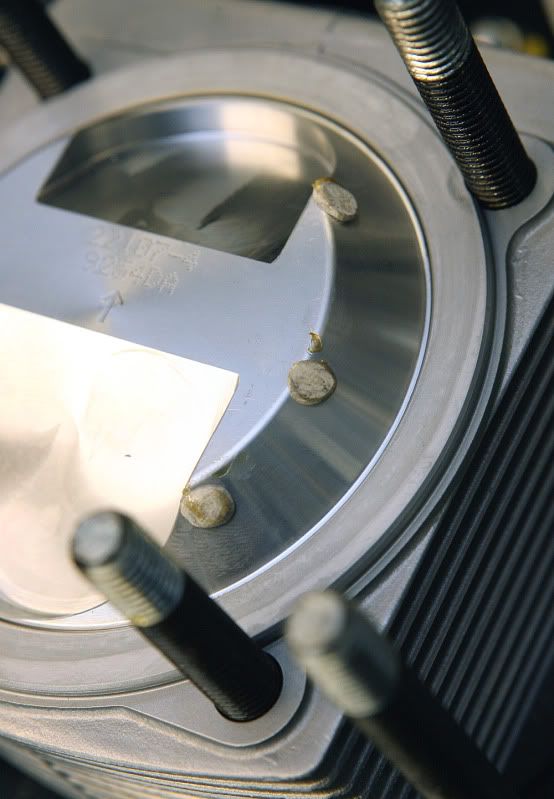
Plenty of gap for safety and as the pistons have deep pockets more than enough for even the occasional over rev

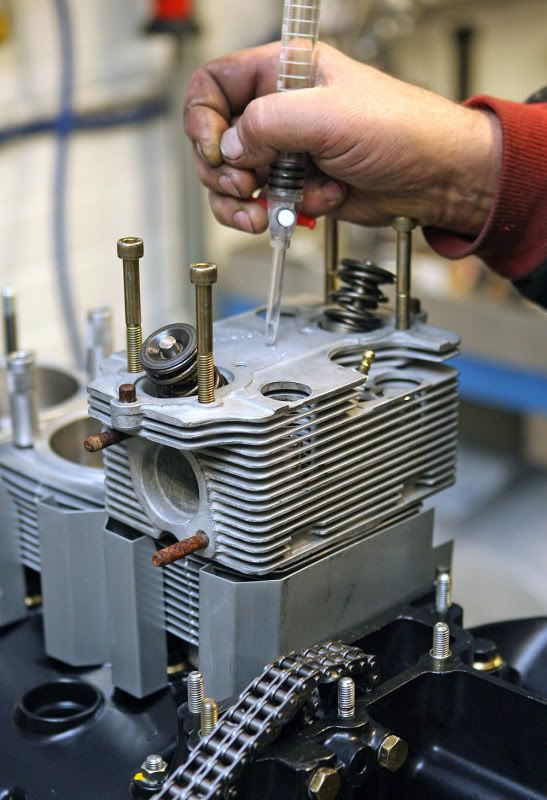
As I mentioned before the computer prediction for the compression ratio was 10.1:1 slightly lower than we hoped for, but it's not until you can physically test the head in situ that you come up with the true figure. The bench volume test as outlined earlier gave us a new better figure but to make sure we did two more tests. First using the twin plug head already torqued down we fitted in place of a spark plug a specially made one with a hollow centre to flow paraffin through, then measuring the fluid put in and rocking the engine to get out bubbles we got a new figure of 10.4:1. I was really pleased but it still wasn't accurate enough for Neil, the problem being you can't see in and therefore can't be sure you have all the bubbles out! He had a final test up his sleeve. He took off the twin plug head and fitted up a scrap head with a known volume which had a drilled hole dead centre through the top into it's chamber. Now pouring in the fluid, as it's a central hole gravity ensures the air rises to the top and out, giving now the most accurate figure you can get, and doing the calculations by hand it confirmed the 10.4:1
So now the heads were done and ready to go on.
cheers, Mike.
previously..
1994 968 Club Sport Riviera Blue
1994 993 C2 Carrera Riviera Blue
1972 911S to Martini RSR Prototype Spec
1973 911E to RS Lightweight Specification
1981 924 Carrera GT ex Mexborough car
3.2 Carrera Sport x2






 )?
)?