Getting there Gary

.
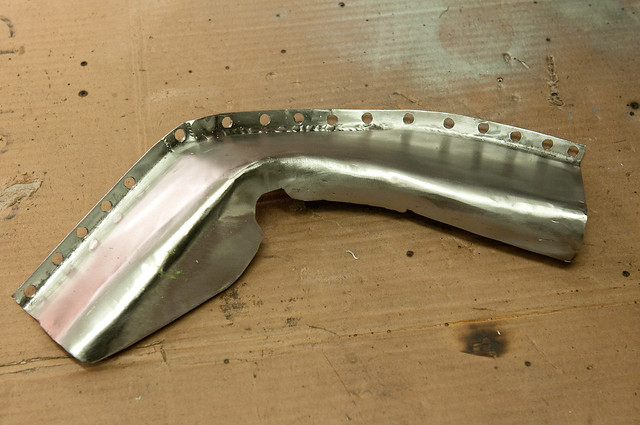
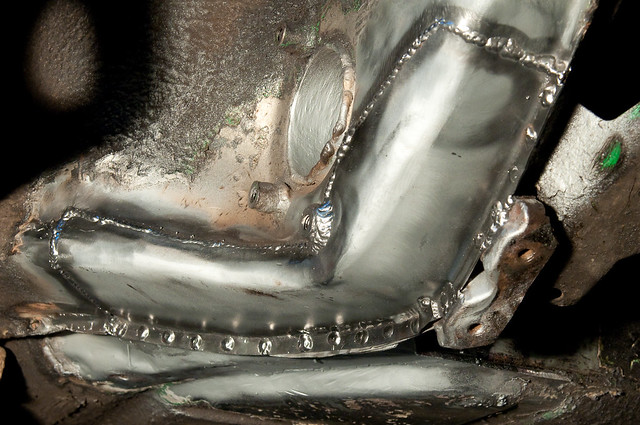
I guess the best bit of advice I can give with this type of area is to divide the outer radius into two: so you have the horizontal part (with flange) with half of the radius to it's outside edge, heading upwards, and the vertical part dropping down with it's own half-radius sweeping inwards.
Use self-gripping pliers (Mole / Vise grips) to hold the lower areas in place (flange to flange), and self-tappers for the upper. File down one of the edges smooth, and have that overlapping the un-filed one. Scribe all of the way along, plus a couple of vertical register marks going at 90d to the join.
After that you can remove these parts from the car and weld / dress them on the bench. Et voila, one 'pressing'. Well, that's the idea anyway.
BTW, it's generally accepted that for non-powered work, the biggest flange that you can really shrink or stretch is about 3/4 inch. After that the metal is getting so thick / thin / stressed, it's better to divide that area somehow.
I guess what this means, is that when you are creating some of these shapes, it's difficult because it's difficult

. To put it another way, it's not particularly that someone is doing it wrong, and therefore struggling, it's just that even when you do it right it's still blinking tough

.
Anyway, a lot of this comes down to:
1) Where you place the joins, so that you don't have a situation where you're putting a load of shrink / stretch into one part, and next to none in the next.
2) How heavily and rigidly (is that a word?) you can hold the work (i.e. so all of your energy is going into moving the metal, and not bouncing your vice / workbench / dolly etc around). Also how big / heavy the blows are. The difference between using a light vice on a light bench with a small hammer, compared to a massive vice on a solid bench with a large (but correctly profiled) hammer is quite incredible. Literally chalk and cheese.