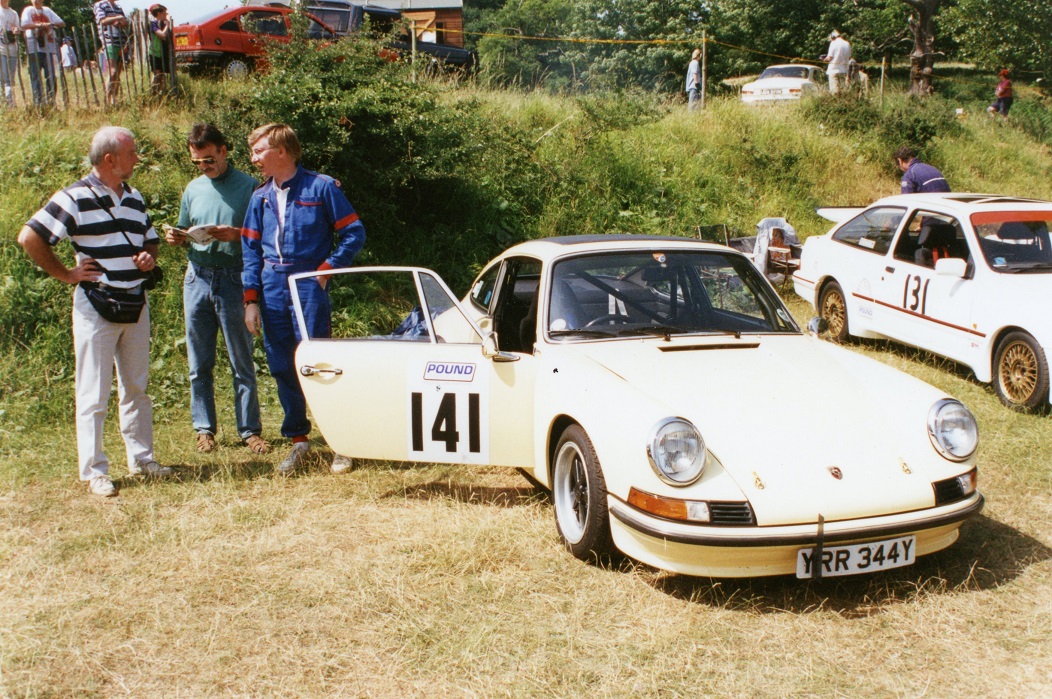
Re-Preparation for my 911 hillclimb car..
Posted: Thu Jun 26, 2025 2:59 pm
Not too sure if this will be of any interest, but maybe a few might find this thread a bit interesting.
This has all come about with the entry of my 911 to Shelsley Walsh on 19/20 June and the DDK meeting there on the Sunday.
It's not a l o n g thread at least!
I bought my 73T in '88 to rebuild and compete in local hillclimbs for something new and different to the Hot rod world i was used to for around 20 years before.
In 1990 I did my first hill, Batings Dam up north and a sprint at Curburough, neither particularly exciting me, but confirmed that I don't like short hills, one-day meetings or sprints!
To cut out lots of boring stuff I quickly joined the Midland Hillclimb Championship and regularly ran at Shelsley Walsh, Loton Park and Prescott in the 911 which made the car more modified, a bit faster and always too slow ( in my hands).
After about 13/14 years the car was retired and a hot Subaru Impreza took it's place and then my beloved Lola-Porsche.
I kept the 911 thankfully and it was slightly softened for road driving to a few events and local runs, no competition. It's last event was at Loton Park, #23.
For this June's event the car needed to be sorted out for hillclimb rules generally, so the search was on for the old hillclimb bits I'd stashed away, and mainly forgotten about.
I wanted to avoid littering the car with 'permanent' stickers, so I'll take you through this preparation:
A hillclimb car must have certain details which are all really safety details
First is to isolate the car if it gets off track so to speak.
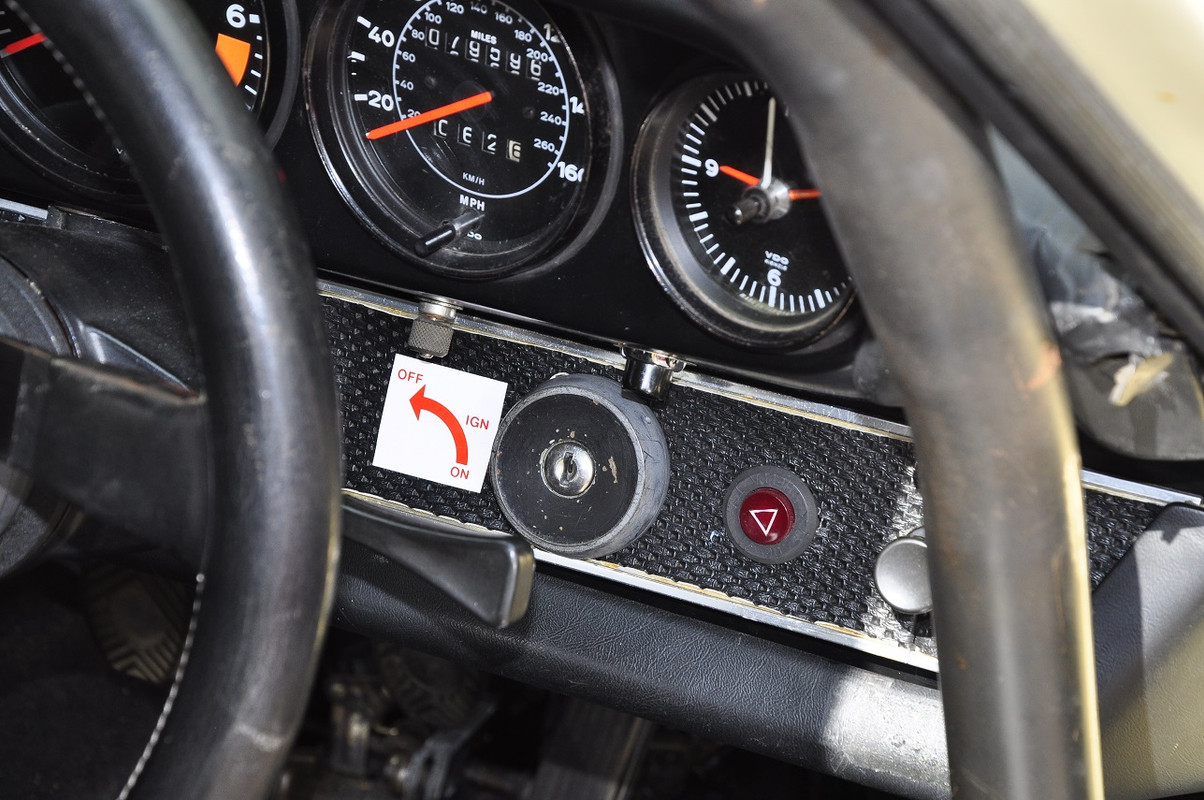
You need a clear marking which was to turn the ignition off in side. You can buy a sheet of stickers for this, affectionately known as 'Scrutineer's Stickers'.
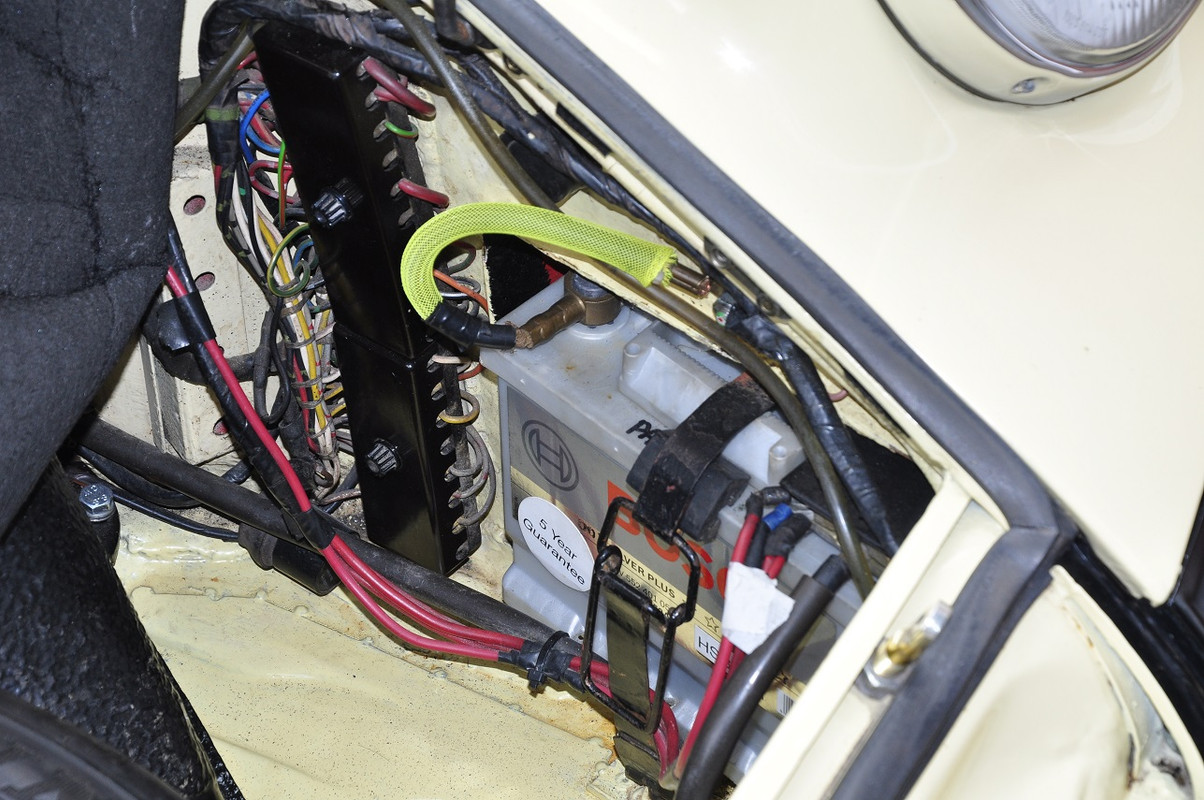
Along side this you need to have a yellow band on the battery negative lead, two in the case of an early 911.
In the case of the 911 you have to remove the spare wheel and any covering over the batteries. (ie carpet).
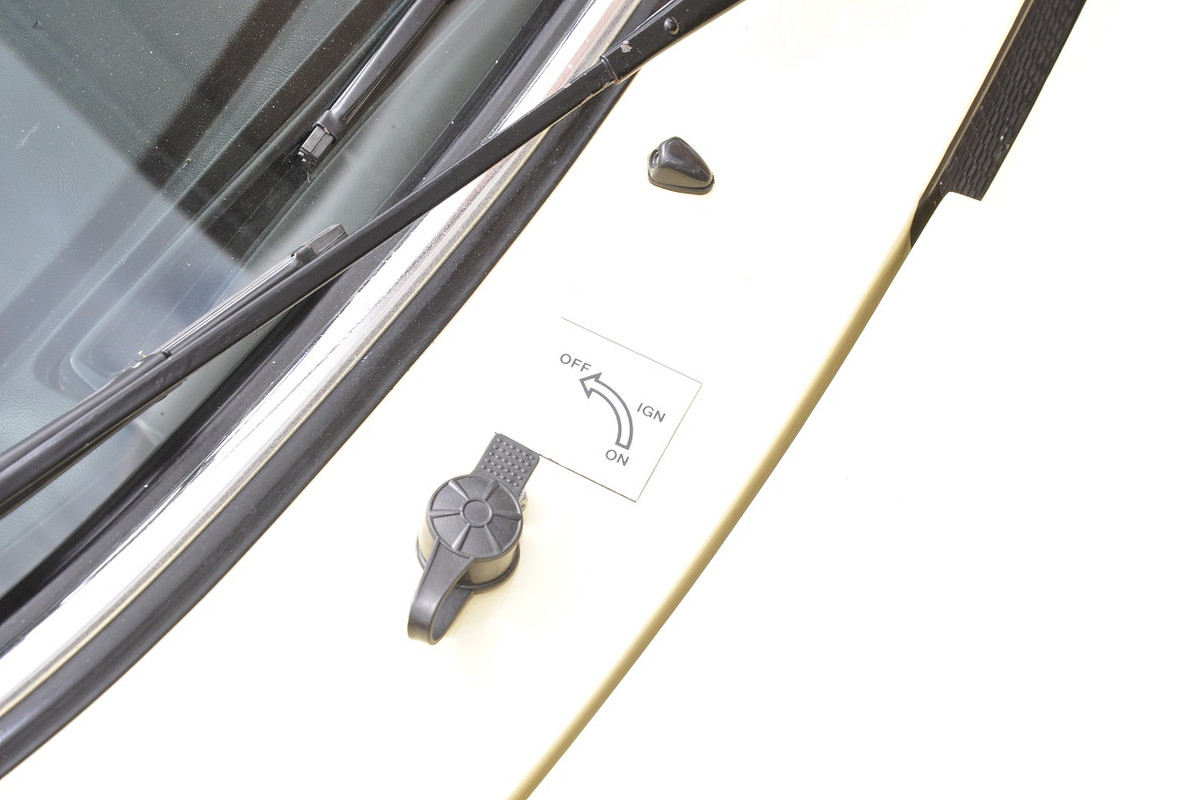
Some years ago I competed in the PCGB speed series which demanded that the car have an exterior isolation switch at the base of the windscreen driver's side. This is still there and it too needs a diagram at the which way to turn the red switch 'handle'. This sticker was placed on a magnetic base so to aide removal at any time without taking paint off!
 upload photos
 post a picture
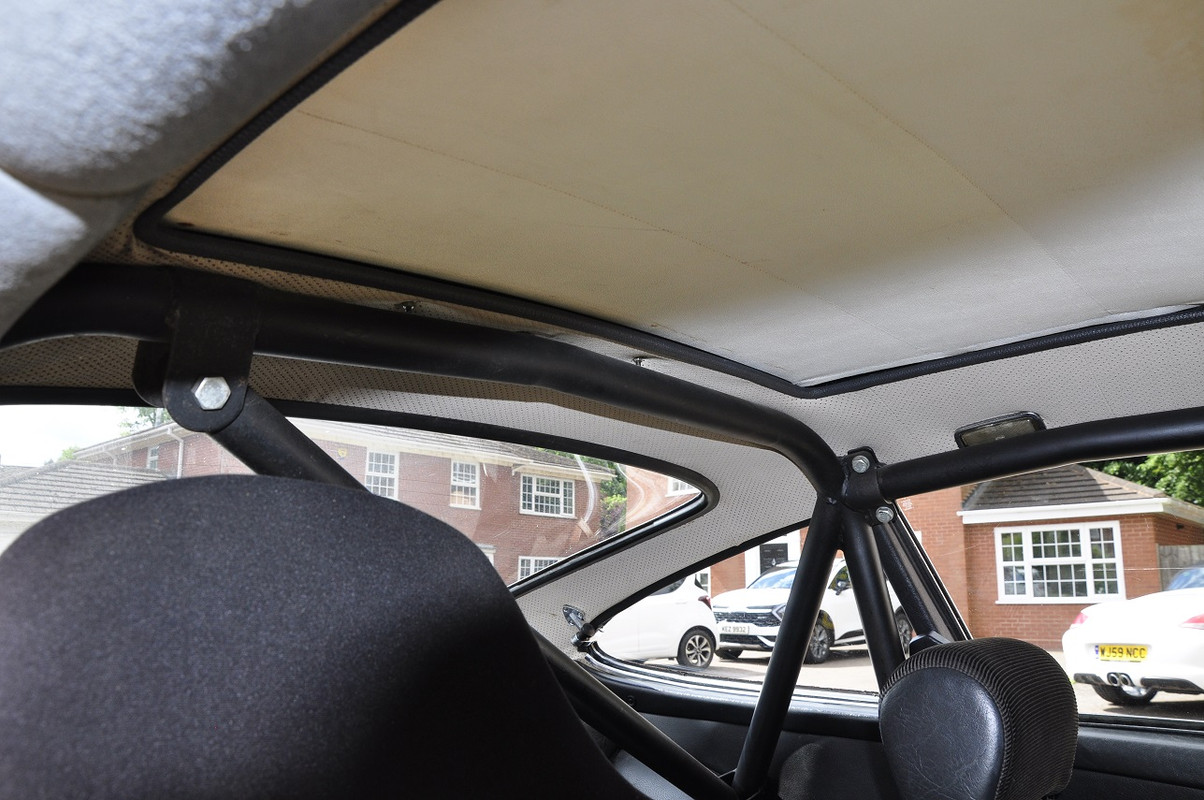
While inside the car I replaced the roll cage's diagonal, removed for road driving as it hinders the rear view. I fitted this cage after a hard thump in the car at Shelsley Top Esse in the early 90's.
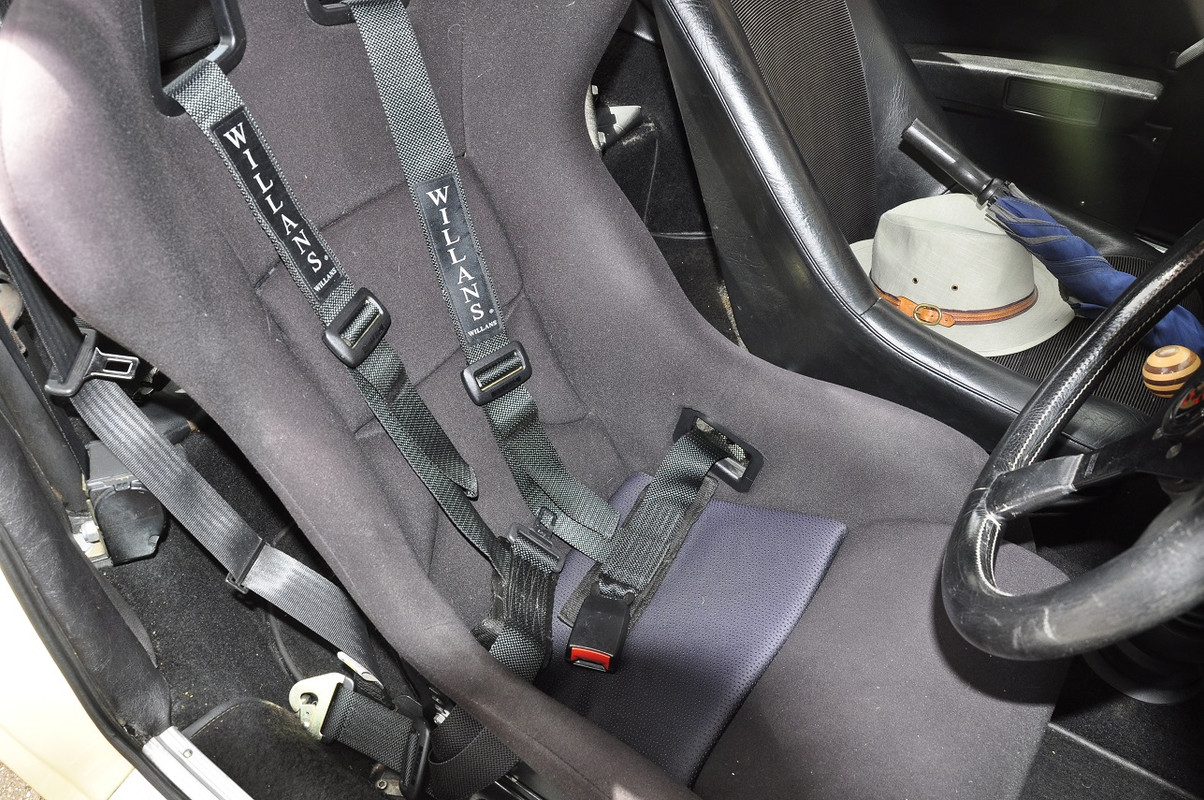
With this the Willans 4 point race harness went back in using the eye bolts left in place when I retired the car. Nice belts and being 50mm wide perfect for the modern Hanns head restraint system I use today in my Lola.
The seat in the car is my old hillclimb FIA seat, superbly comfortable with big cut-outs to pass the Willans belt through so I can use the ordinary retracting belt on the road and the 4 point on the hill.
Inside done, now how to get the car off the track if the marshals need to tow it.
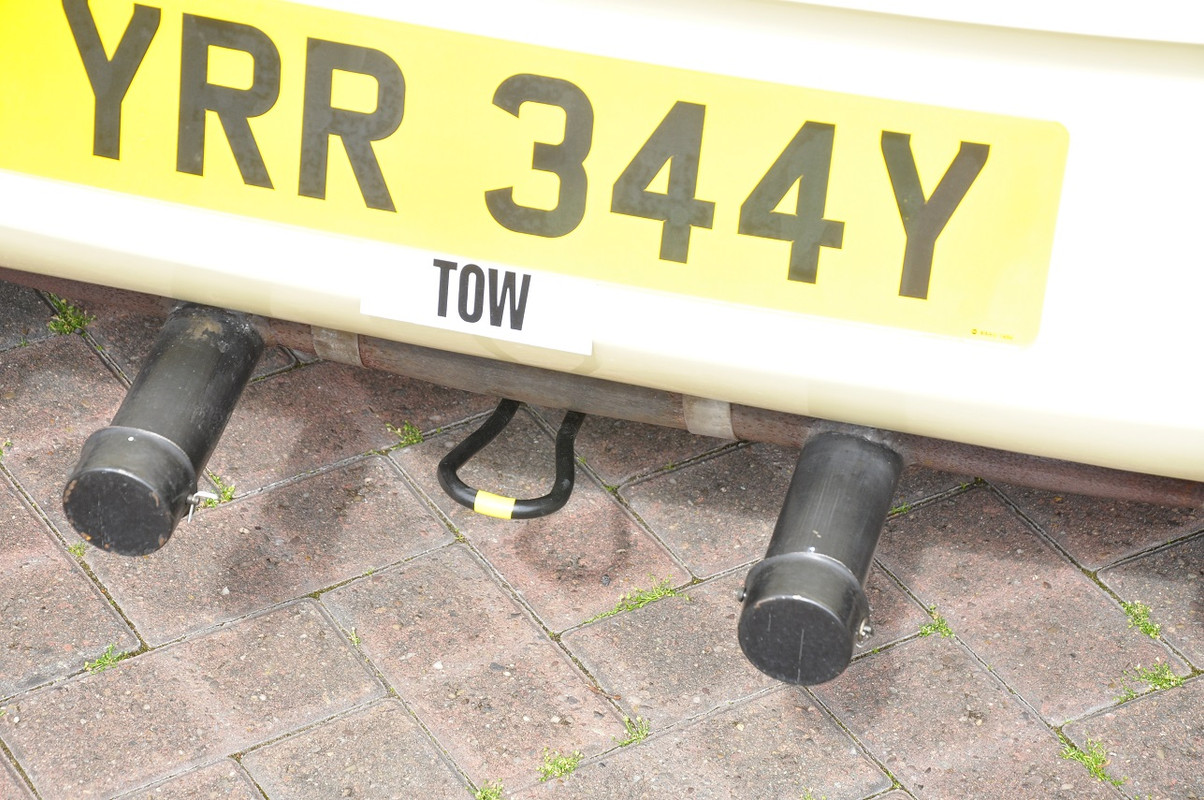
Rules have changed over the years, so I fabricated some time ago a front tow loop attaching to the factory position on one of the front suspension front mounting points, and another to the rear attached to the engine cross bar used to jack the car up and also to have a loop.
Both loops must have a yellow band to guide the marshals to the right towing point. Rather doubt a marshal needs such guidance!
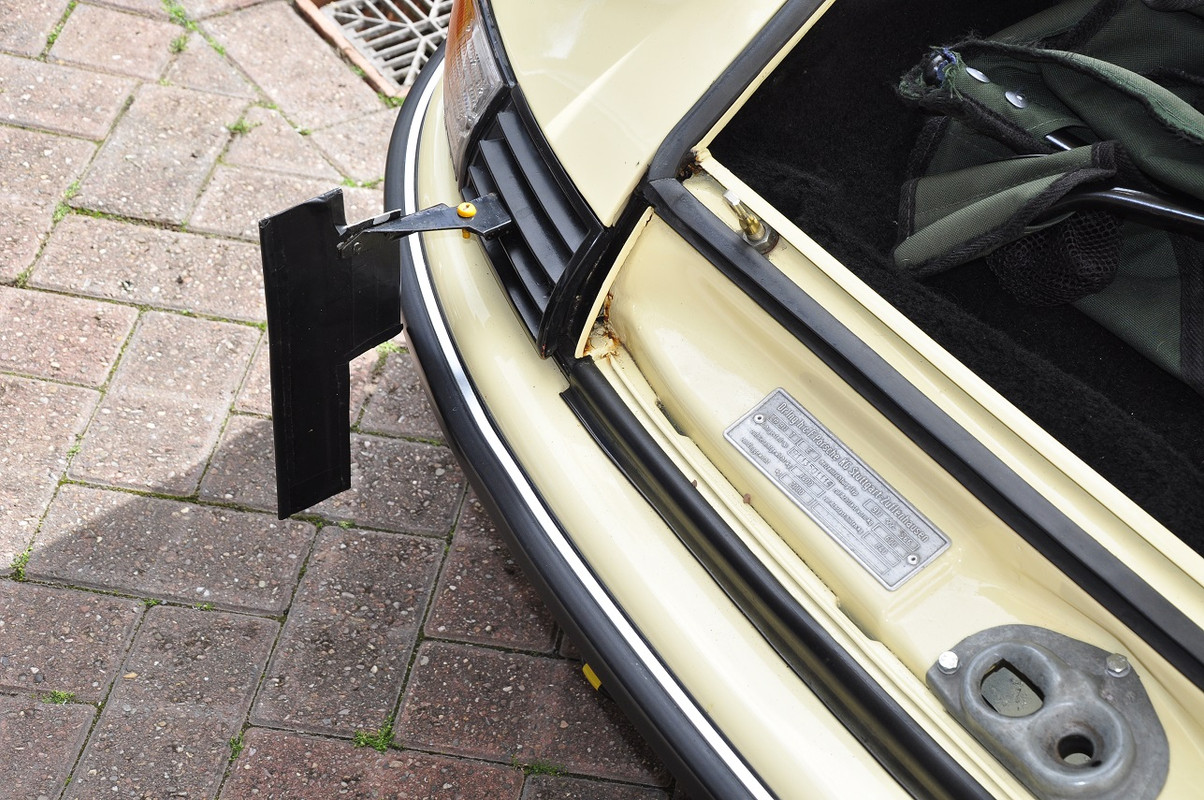
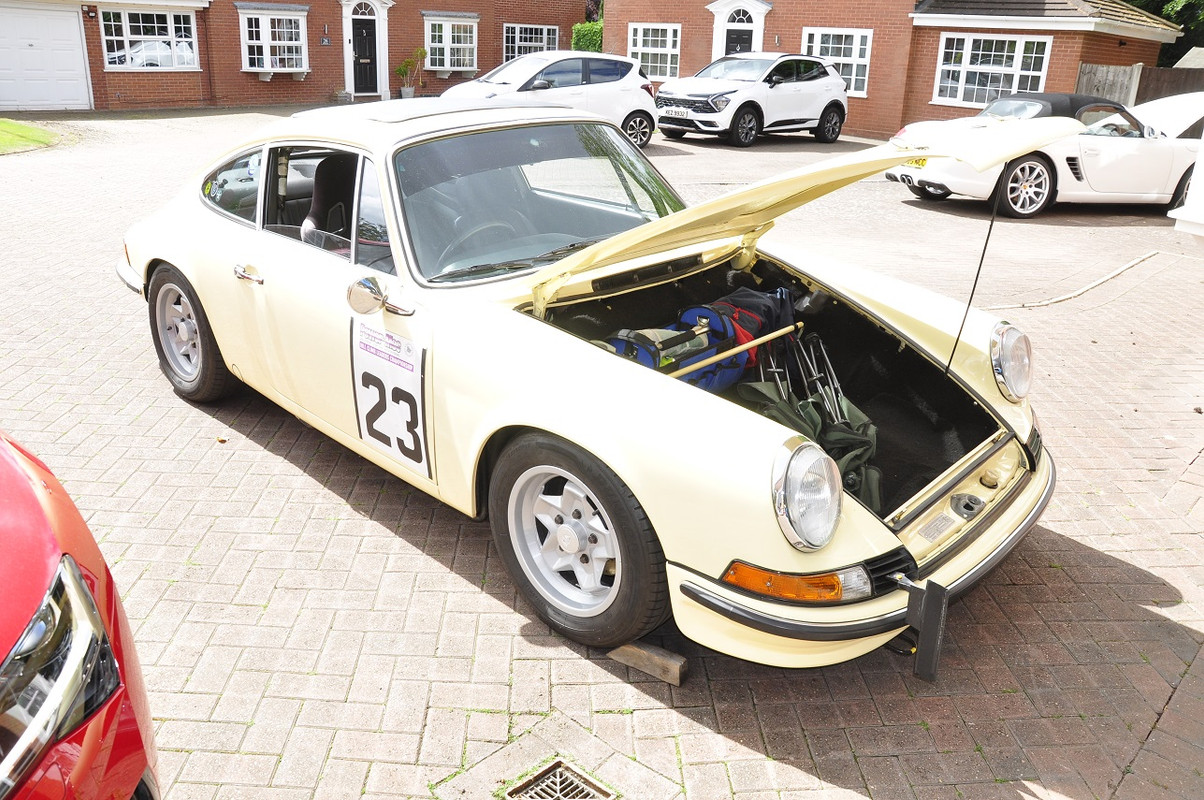
If you are still reading this you will notice on the last picture a large black 'blade' , known as the timing strut that must be attached firmly to the front of the car. This strut is used to set the car onto the start line very accurately, but you should not drive on the road with it fitted or a Police Man may give you grief. It is held on using a simple number plate fixing plastic screw. The bracket is screwed to the battery box just behind the grill.
Nearly there!
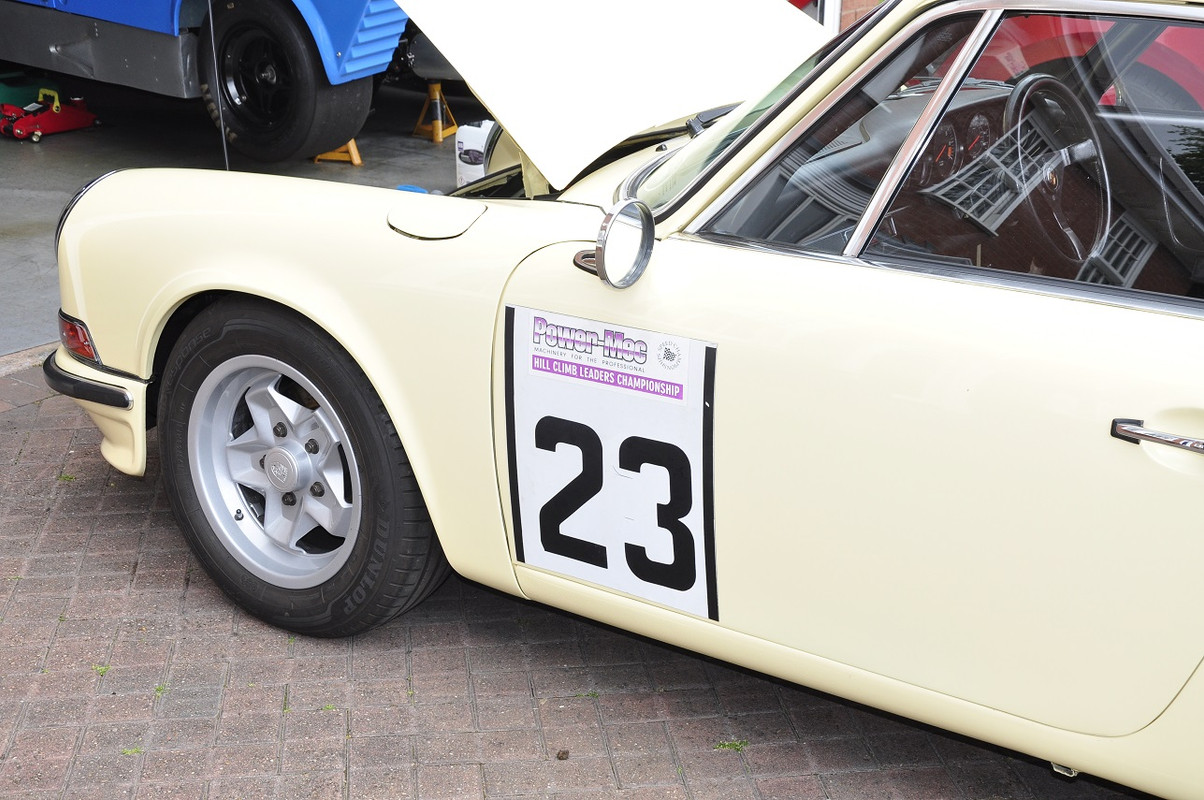
The cars are all allocated a number for the event. This number must be a certain size, about 9" and be of contrast to the car panel it is attached to.
I used two magnetic sheets with numbers and sponsor's details which can be taken inside the car to the track and snapped into place on the two doors.
It is technically very frowned upon to drive a competition car with numbers still exposed and legible on the road.
I know of one competitor who had is race license marked for breaking this rule.
The car number also has to be visible from the front of the car to aid marshals identifying the car in the paddock, so these go on the head lanp lens.
Phwe!
That is the car sorted.
The Driver also needs a few things, but that is simply a correct helmet to the current standard, correct overalls to correct standard and clean(!), gloves to the correct standard and if you are wise a hanns device.
In a 911 coupe you will have to race with all windows closed.
I'm looking forwards to the Shelsley Walsh event to run this car after about 20 years.
A magic place to be, but not my favourite hill!
Hope this will have been of some interest and writing it has kept me out of he garden on a very hot day!
This has all come about with the entry of my 911 to Shelsley Walsh on 19/20 June and the DDK meeting there on the Sunday.
It's not a l o n g thread at least!
I bought my 73T in '88 to rebuild and compete in local hillclimbs for something new and different to the Hot rod world i was used to for around 20 years before.
In 1990 I did my first hill, Batings Dam up north and a sprint at Curburough, neither particularly exciting me, but confirmed that I don't like short hills, one-day meetings or sprints!
To cut out lots of boring stuff I quickly joined the Midland Hillclimb Championship and regularly ran at Shelsley Walsh, Loton Park and Prescott in the 911 which made the car more modified, a bit faster and always too slow ( in my hands).
After about 13/14 years the car was retired and a hot Subaru Impreza took it's place and then my beloved Lola-Porsche.
I kept the 911 thankfully and it was slightly softened for road driving to a few events and local runs, no competition. It's last event was at Loton Park, #23.
For this June's event the car needed to be sorted out for hillclimb rules generally, so the search was on for the old hillclimb bits I'd stashed away, and mainly forgotten about.
I wanted to avoid littering the car with 'permanent' stickers, so I'll take you through this preparation:
A hillclimb car must have certain details which are all really safety details
First is to isolate the car if it gets off track so to speak.
You need a clear marking which was to turn the ignition off in side. You can buy a sheet of stickers for this, affectionately known as 'Scrutineer's Stickers'.
Along side this you need to have a yellow band on the battery negative lead, two in the case of an early 911.
In the case of the 911 you have to remove the spare wheel and any covering over the batteries. (ie carpet).
Some years ago I competed in the PCGB speed series which demanded that the car have an exterior isolation switch at the base of the windscreen driver's side. This is still there and it too needs a diagram at the which way to turn the red switch 'handle'. This sticker was placed on a magnetic base so to aide removal at any time without taking paint off!
upload photospost a pictureWhile inside the car I replaced the roll cage's diagonal, removed for road driving as it hinders the rear view. I fitted this cage after a hard thump in the car at Shelsley Top Esse in the early 90's.
With this the Willans 4 point race harness went back in using the eye bolts left in place when I retired the car. Nice belts and being 50mm wide perfect for the modern Hanns head restraint system I use today in my Lola.
The seat in the car is my old hillclimb FIA seat, superbly comfortable with big cut-outs to pass the Willans belt through so I can use the ordinary retracting belt on the road and the 4 point on the hill.
Inside done, now how to get the car off the track if the marshals need to tow it.
Rules have changed over the years, so I fabricated some time ago a front tow loop attaching to the factory position on one of the front suspension front mounting points, and another to the rear attached to the engine cross bar used to jack the car up and also to have a loop.
Both loops must have a yellow band to guide the marshals to the right towing point. Rather doubt a marshal needs such guidance!
If you are still reading this you will notice on the last picture a large black 'blade' , known as the timing strut that must be attached firmly to the front of the car. This strut is used to set the car onto the start line very accurately, but you should not drive on the road with it fitted or a Police Man may give you grief. It is held on using a simple number plate fixing plastic screw. The bracket is screwed to the battery box just behind the grill.
Nearly there!
The cars are all allocated a number for the event. This number must be a certain size, about 9" and be of contrast to the car panel it is attached to.
I used two magnetic sheets with numbers and sponsor's details which can be taken inside the car to the track and snapped into place on the two doors.
It is technically very frowned upon to drive a competition car with numbers still exposed and legible on the road.
I know of one competitor who had is race license marked for breaking this rule.
The car number also has to be visible from the front of the car to aid marshals identifying the car in the paddock, so these go on the head lanp lens.
Phwe!
That is the car sorted.
The Driver also needs a few things, but that is simply a correct helmet to the current standard, correct overalls to correct standard and clean(!), gloves to the correct standard and if you are wise a hanns device.
In a 911 coupe you will have to race with all windows closed.
I'm looking forwards to the Shelsley Walsh event to run this car after about 20 years.
A magic place to be, but not my favourite hill!
Hope this will have been of some interest and writing it has kept me out of he garden on a very hot day!