I wanted to do something interesting with my door cards, since the originals were wrecked beyond salvage.
To start the job, I cut new boards from 3mm Foamex. I like Foamex because it's stiff, light, easy to cut and, unlike board or plywood, impervious to water.
Then I covered them with 3mm foam underlay (intended for use under laminate flooring) which I bought from a carpet retailer on the high street. As I mentioned above, I wish I'd used thinner foam as with the rear arch covers since it gives a more factory feel.
I covered the whole door card with basketweave vinyl which I bought from Garry Hall (VisualFX on here). I considered adding a pocket in plain vinyl along the whole length of the bottom of the card, but was worried that the wrap-around at the edges would end-up a podgy mess. So I opted to keep it simple. I also managed to salvage the plastic beading from the edge of the original door cards, so I cleaned that up and fitted that, too.
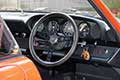
(This photo is from p65 of this thread, where I was talking about making the dash top. I ended-up scrapping that dash top and making another since the new foam bit of the dash was a slightly different shape to the original. It's a story for later, or probably never, since it was so insanely tedious).

That was over a month ago. I left the cards, since I couldn't work out what I wanted to do about door pulls.
The problem lay in the way the pull would enter the door. I'd seen some really nasty solutions on Pelican etc - holes just cut in vinyl, tatty edges, etc. I didn't want this. I liked the solution I'd seen on Mark Slade's restoration thread - with a metal grommet. My worry here was that over time the grommet would pull-away from the door card, especially given that the straps I had bought were so thick. But I liked the straps and didn't want to change them, so I had to come up with another idea...
First I tried melting through a test piece of vinyl with a hot section of square steel tube. No matter which temperature I tried (hot, hotter, molten lava), it looked like shite.

After several hours of trawling around haberdashery websites, I found an oval grommet that I thought might do the job. I ordered it and it arrived in a pink envelope in a pink plastic bag with a handwritten note saying thanks etc. Nice, but I wonder if the sender would have gone to all this trouble if they knew what a motherfuckin' badass I was?
The two halves screw together, so there was no way that was coming away from the door once installed.

They were chrome, but with a bit of emery paper I was able to give it the same effect as I did with the decklid badging...

The only problem here was the opening - too small for the strap to enter and continue towards the door catch at the same angle. What a pain.

I considered turning the grommet 90-degrees and using a different pull - perhaps some braided leather cord or something. But I didn't like the idea of using cord. It had to be this strap.
By now I had spent the best part of a day poncing-around with this. It was late, so did something I never do and went to bed at sensible o'clock. I must have dreamt about it all night, because at 7.20am, I woke up with a very clear idea of how I was going to proceed...
First I cut the required hole in the inside door panel:

... I painted the lip of the hole to prevent rust.
Then this:


At the end of the strap that attached to the door latch, I made a little tab. This is 2024 aluminium - what is commonly referred to as 'aircraft grade'. This is better than aircraft-grade - it's EASA-certified, flight-ready 2024-alu, cut from an actual bit of old aeroplane. Because it is blessed by the unforgiving fist of EASA, it cannot go wrong.

Before installing the door card, I searched the house for some tough, no nonsense, working-class door liner material. Unfortunately none was available, and I had to instead make-do with this very middle-class House of Fraser door liner instead.

This is the end result:

I doubled-over the end of the strap to make a door pull. On the other side of this hole is a 6mm anchor nut, riveted to the inner door panel. It's a low-cost, lightweight, simple result. I've never seen it done before - am I the first?

If so, I hereby declare it a
Signature Touch.






 ). Front was actually more tricky, but we were trying to avoid damaging the heating elements.